
- January 10, 2026
- Darren Tobia
In the early days of Lambertville’s history, the Delaware River was used as a waterway to transport goods and power local mills.
Its proximity to the water once fueled the economy of this historic town. But it has also made it vulnerable to flooding.
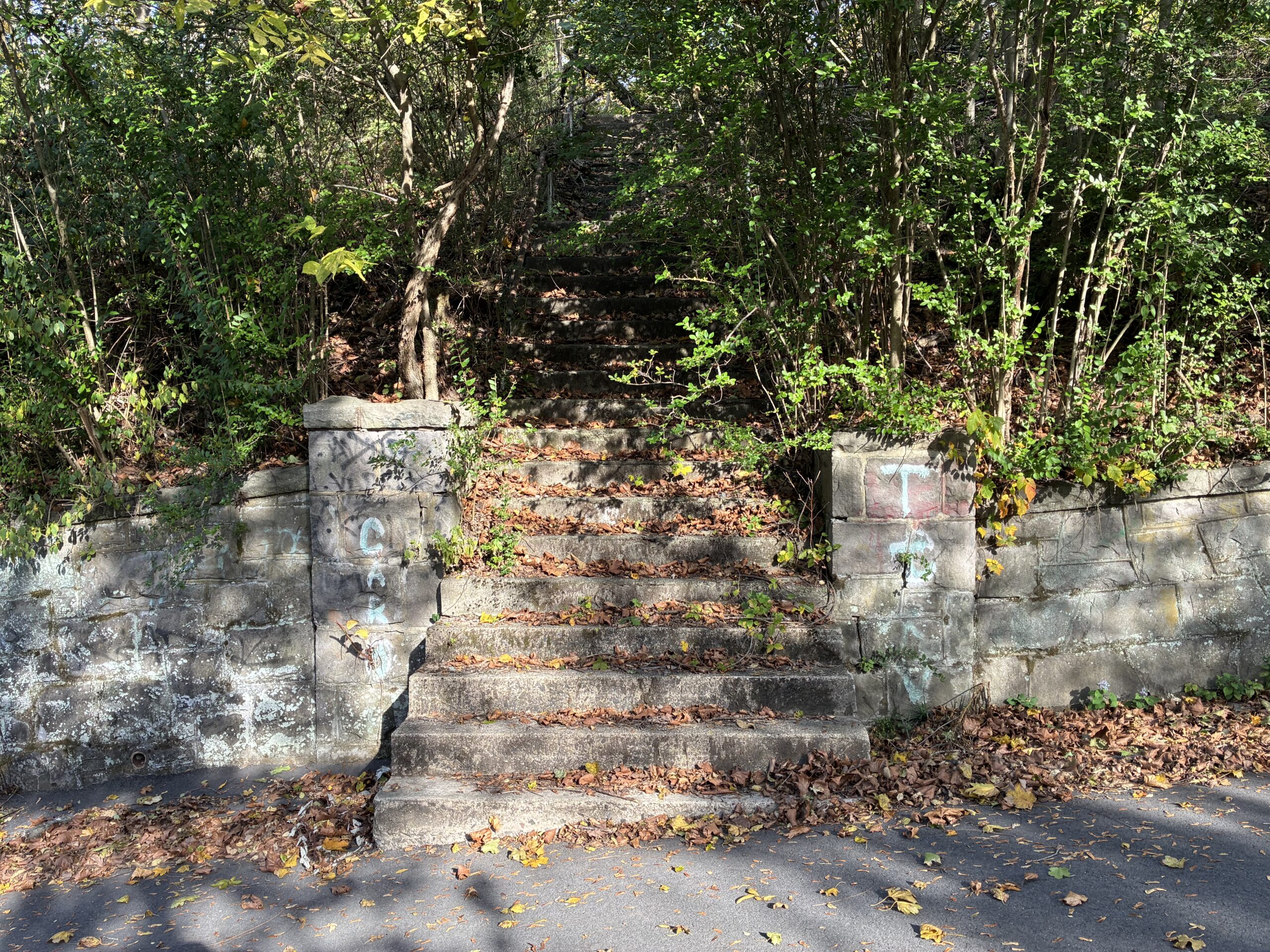
Residents believe the problem with flooding is only worsening due to new development. The latest plan for new construction concerning residents is at the old Lambertville High School, built in 1913. Today it lies in ruin after a devastating fire in 1992. But K. Hovnanian, one of the state’s largest developers, has been trying to build a new 200-unit apartment complex for the last two years. It would be considered the largest development in Lambertville’s history.
Last year, the town government was moving toward designating K. Hovnanian the official redeveloper of the site. But after hearing outcries from the community, the City Council never passed the legislation. In turn, the company filed a builder’s remedy lawsuit against the town government. In July, Judge Robert Ballard ruled in favor of K. Hovnanian.
“Every square inch of this town is getting built on. We’re losing all the absorption we have because everything has become impervious with development, driveways, and sidewalks,” said Jeff Tittel, who lives on Wilson Road. “And now up on a hill, above the town, they want to put this big massive project.”
Tittel, a former New Jersey Sierra Club director, has become one of the most vocal opponents of the plan and has encouraged residents to put signs in front of their homes and along Route 179 protesting the plan.
One of the residents opposing the new development is Susan Rovello, who knows firsthand the aftereffects of development. She said she never had even a “teaspoon of water” in her basement until construction began at another project called Lambert Hill, a condo development. Rovello was living in an 1890 home on North Union Street at the time.
“The worst time the floodwater came all the way up to my basement ceiling,” she said.
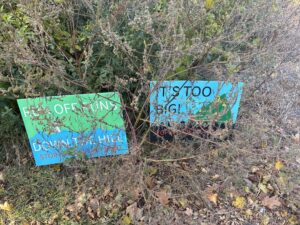
A sign in Lambertville protesting the redevelopment of the former high school site. Photo courtesy of Darren Tobia.
Rivello left that home 13 years ago and moved farther up on the hill. Since then, flooding has improved. But the new development at Lambertville High School is worrying her.
Tittel, who was the longtime director of the Sierra Club before retiring in 2021, also believes the site’s industrial past is coming back to haunt the township. In the 1980s, the high school became an electronics factory that used Teflon. Next to the property is also a former municipal landfill, a longtime site of illegal dumping, residents claim. A Department of Environmental Protection report claims that this site could be a source of contaminated wells in the town and West Amwell.
“This is where we think the PFAS may be coming from because they would use Teflon to coat electrical parts,” Tittel said. “There is a history of lawsuits between the owner and the town to clean up the site.”
Tittel, during his time at the Sierra Club, fought to get the PFAS standards in place. “I’ve been working on these issues for most of my life,” he said.
K. Hovnanian has agreed to remediate the site. But Tittel has trouble trusting the company with the effort, especially after incurring numerous violations of the Clean Water Act. In 2010, the K. Hovnanian was forced to pay $1 million for alleged violations at 591 construction sites.
The Department of Environmental Protection is currently investigating contamination of well water in the region and has already found contamination in 70 wells, with some testing 10 times higher than the DEP standard for contamination.
“There have been serious levels of contamination in private wells,” said Mayor Andrew Nowick. “The city took this matter very seriously from the first and has regularly met with NJDEP and affected residents since.”
One of the residents with contaminated drinking water is Shaun Ellis, who discovered his son had testicular cancer at 16 years old. “It’s the number one correlated cancer to PFAS exposure,” Ellis said.
Ellis, a librarian at Princeton University, is considered the first resident to report a PFAS-contaminated well above the DEP standard. Other toxic chemicals like PFBS and PFBS were also found.
His son is now in remission and his family is no longer drinking tainted water after installing a treatment system. But he hopes by speaking out about the development he can prevent others from getting sick. Despite the DEP investigation, the Lambertville High School site still hasn’t been tested. Nowick said K. Hovnanian hasn’t given the DEP permission to test the site.
“No one seems to be taking this seriously,” Ellis said. “We want to see affordable housing in Lambertville, but building in a toxic area doesn’t seem like the goal of the Mount Laurel Doctrine.”
Darren Tobia is the editor of the Four Oranges, which covers the arts and historic preservation in Essex County.