

- January 17, 2026
- Darren Tobia
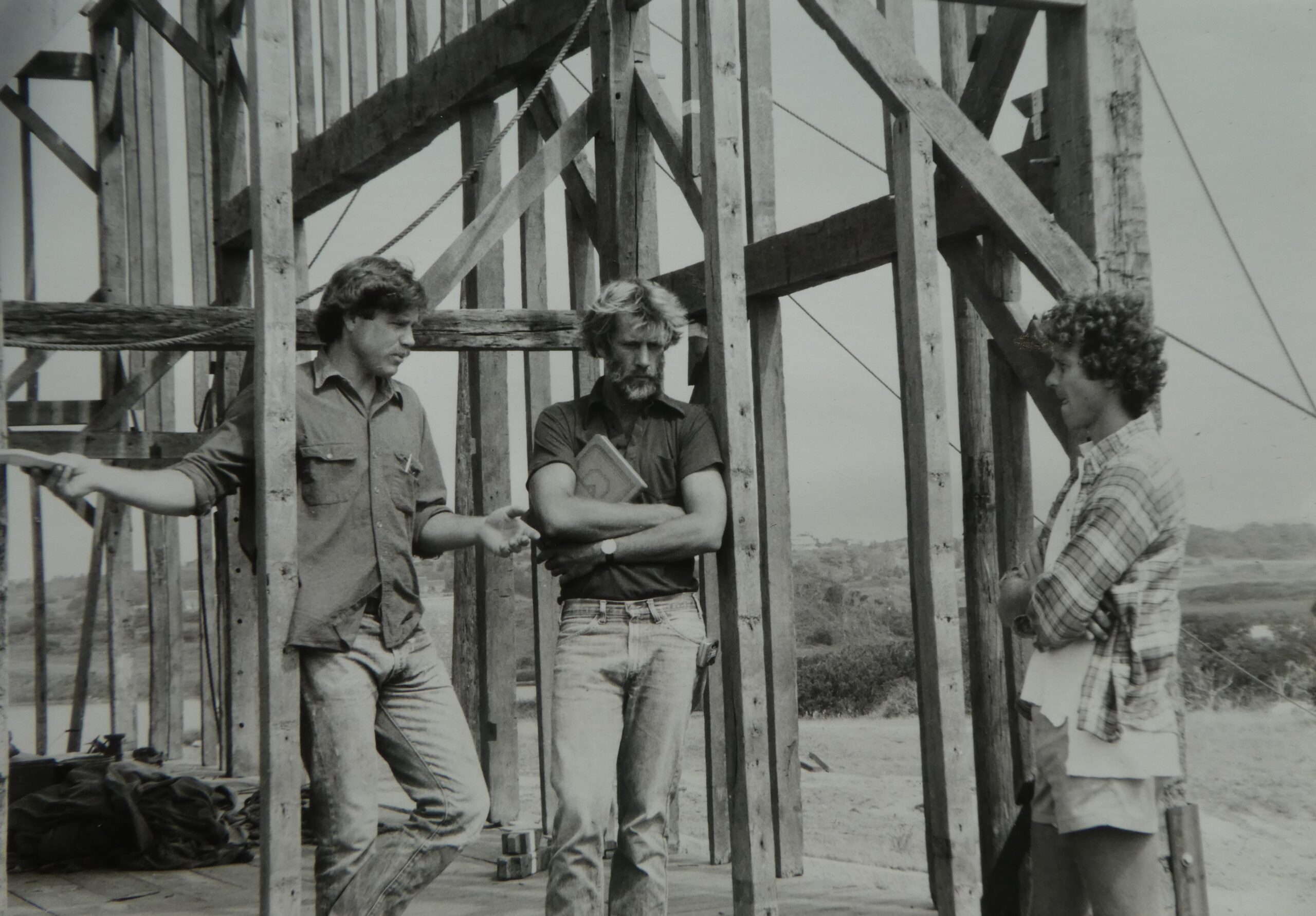
It is one thing to be knowledgeable about a subject. But Elric Endersby, the late preservationist from Princeton who died last year, had the rare ability to sway the minds of property owners, an important gift to have when saving historic buildings.
Endersby, one of Princeton’s Historic Preservation Commission longest sitting members, did not live to see the commission approve the plans last year for the Joseph Hornor House, a pre-Revolutionary War building.
But the developer Daniel Barsky still paid tribute to him at the meeting for convincing him to scale back his original proposal in order to save the building. It was an instance in which a developer concedes ground to the expertise of a preservationist.
Endersby’s speech about the Hornor House at the HPC meeting in 2024 about why historic buildings are worth saving and what they tell us about those who constructed and inhabited them is worth listening to anyone who needs some reassurance about the power a good preservationist can wield.
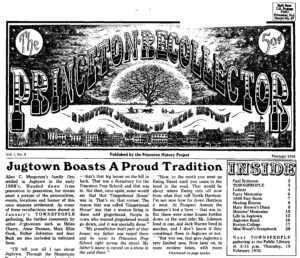
The masthead of The Recollecter was hand-drawn by Elric Endersby.
“He used his gifts so well to articulate the importance of preserving our heritage here and to convince people that there’s a better way,” Clifford Zink, one of the founders of Save Jugtown and Endersby’s longtime friend. “He even said that to the developer at the HPC meeting.”
Born in Princeton in 1946, Endersby had an important vantage point of what was happening in his hometown, a time of change. The university town was growing and the farms he grew up around were being sold off and subdivided. As a child, he documented these changes, drawing the world around him. Endersby came to the field of preservation as an artist.
In the 1960s, he went off to Trinity College to study architecture and art history. It was a time when preservation as a movement was beginning to gain traction. The decade culminated in the creation of the State Register of Historic Places in 1970.
When Endersby returned home after college, he became involved in recording oral histories — first with the Princeton History Project and then with The Recollector, which he founded in 1975.
One thing that is remarkable about The Recollector is that it is not dedicated to the usual historymakers that are often celebrated in a place like Princeton. It didn’t focus on war generals, professors or statesmen, but everyday people — craftsmen, artisans, and farmers who showed incredible skill in the buildings they left behind.
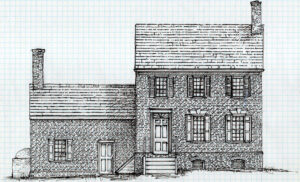
Elric Endersby’s drawing of the Joseph Horner House from 2023.
In 1976, Endersby’s friend, Alex Greenwood, saw a real estate listing for the sale of an important, but badly dilapidated 18th-century historic building called Glencairn — part of the National Register-list Lawrence Township Historic District — that he and Endersby, along with brothers Clifford and Steve Zink, decided to save.
However, after buying the property, the barn fell down. The task of replacing it with a period-appropriate one would change the course of their life. Not only did this begin his career as a preservationist but it led to the founding of the New Jersey Barn Company, dedicated to saving historic farm buildings.
“It gave us a certain amount of pleasure and excitement,” Greenwood said.
“Instead of just fixing some things up and then selling the house for a profit, we got caught up in archaeology and preservation, and trying to make it as historically correct as possible.”
In November, at a memorial to Enderby’s life — held at one of the historic barns the company helped save called the Howell Living History Farm in Hopewell — Zink read from one of Endersby’s stories called All Things are Possible about the barn-raising at Glencairn, which appeared in The Recollector in 1977.
“Each person working on the barn today took today a respect and understanding for those early farmer-settlers who originally cut and hauled out the huge oak timbers from local virgin forests, fashioned them by axe and adze into building pieces, and together with the neighbors raised the massive structure by their own combined strength and simple technology,” the passage reads.
At times, the future of historic preservation seems bleak. It seems that monied interests have far more influence over the fate of landmarks than those who wish to protect them. Even though historic landmarks and districts occupy only small parts of our towns and cities, developers still feel the need to encroach on them.
But if more people could understand Endersby’s life, spent time with his artwork, and read the stories he left behind in The Recollector, perhaps they could understand the importance of preserving history and why some people dedicate their life fighting to save landmarks.
Endersby’s nephew, Farley Gwazda, understands this and is tasked with finding a home for Enderby’s archives. The back issues of The Recollector have already found a haven at the Princeton Historical Society. But the collection includes more than 700 architectural drawings of timber-frame barns primarily from New Jersey, many of which have been demolished. In many cases, Elric’s drawings are the only documentation of these bygone buildings.
“His view of history was rooted in a real respect for a way of life where things were made by hand and people thought about beauty when they were making things,” Gwazda said. “I’d love the archive to not be so much books in a library but a living archive, where people who are interested in vernacular architecture and building practitioners can access it.”
At the November memorial, Elizabeth Kim, the former chair of the Historic Preservation Commission, confided that when she announced her retirement, Endersby said he would follow suit, perhaps believing that he could have more influence shaping projects if he were not on the commission.
But when the time came, Endersby had a change of heart — because he believed there was still more work to be done, Kim said.
“He said, ‘I know I told you I was going to retire with you, but I don’t think I can,” Kim said. “And I know the reason he probably didn’t want to is because he thought there was still work on the Historic Preservation Commission and for him to leave would jeopardize many properties within Princeton.”
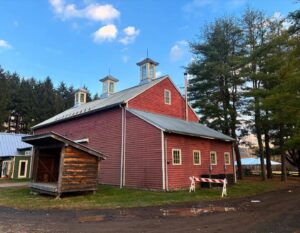
The memorial was held in November at the Howell Living History Farm, one of the barns Elric Endersby helped save.



Hal BROMM
| 19 January 2026Elric’s dedication to historic preservation, and the value of our rural agricultural history, was well known. In Knowlton Township, our Historical Commission was blessed by Elric’s expertise with historic barns during an on-site, day-long session at Belles Barn. Under his direction, the handsome structure was examined, its construction methods investigated, and its origins reviewed by an eager group of budding preservationists. Elric gave freely of his knowledge and talent, knowing that planting the seeds of good preservation practice would bear fruit.
Elric is missed, but his legacy as a barn savior lives on.