

- March 6, 2026
- William Michelson
First and foremost in the practice of historic preservation planning is always its connection to local politics. This is the story of a challenge that I faced a while back, as Chairman of the Plainfield Historic Preservation Commission.
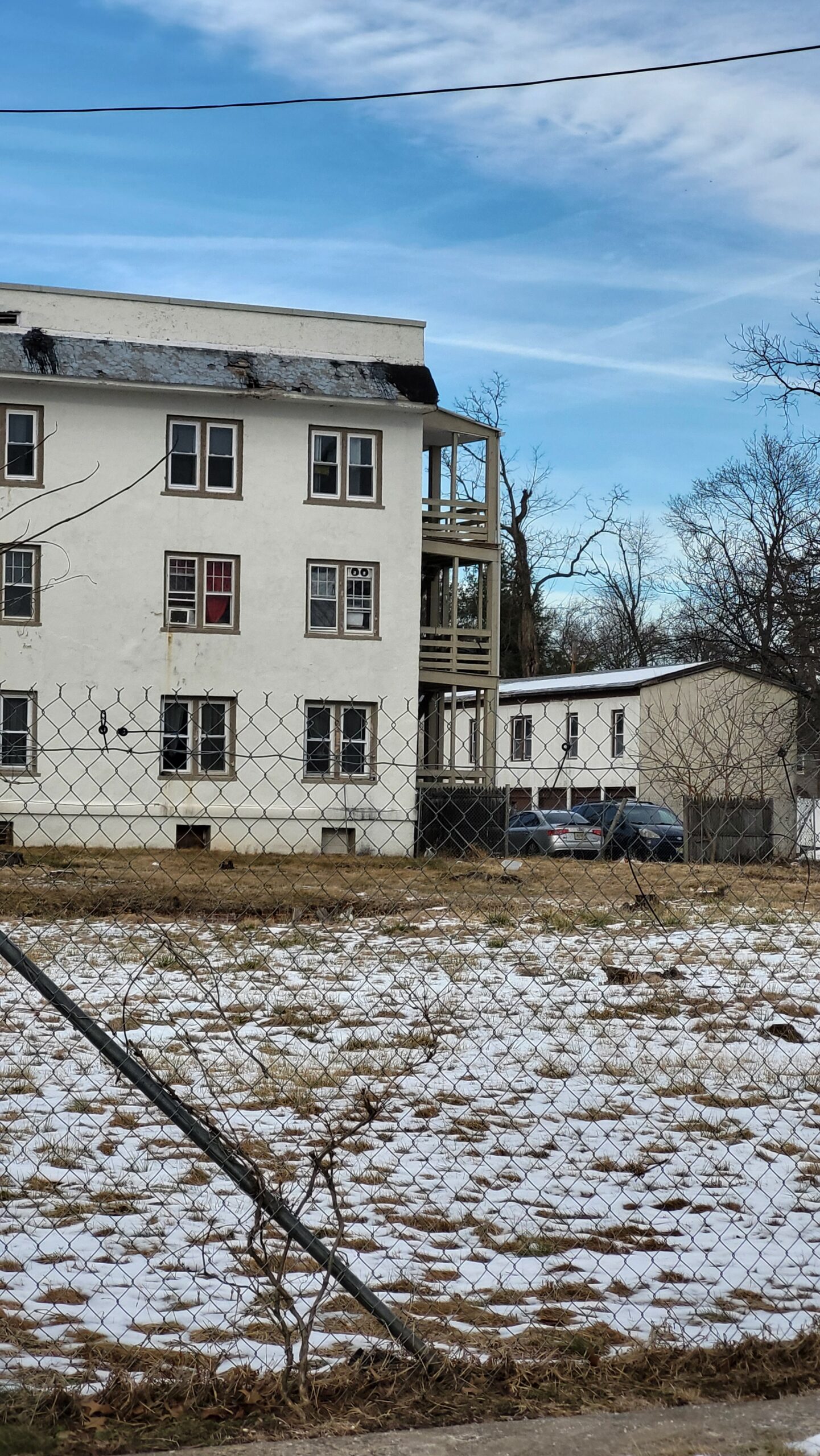
Our Administration has placed great effort behind packaging parcels of available land, such as lots where buildings have been demolished, for new development. We had an Economic Development Director who was aggressively utilizing Redevelopment Plans, a creature of New Jersey statute that can sometimes be useful, because they will supersede the regular zoning. There is a parcel of three adjacent lots in our Crescent Area Historic District, where old houses had burned down in the 1970s, and still lay fallow. The City held title because of old tax liens.
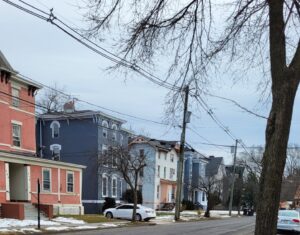
A builder bought the land and wanted to put up two three-story apartment buildings. Its architect tried to conform to the urban fabric of that district, which consists of blocky two- to four-story structures, with short setbacks from the street. My HPC heard the case and requested some modifications, most of which were not a problem. However, the density was – it would put 16 apartments in a neighborhood already congested by multifamily conversions decades ago, close to an apartment house that has no parking at all. The zoning calls for 1- and 2-family houses only, and no more than 4 units per acre.
We were eager to approve the project because this was like a gash across the neighborhood, one that symbolized that no one had built anything in our city for 50 years. Our only qualm was the density, and the resultant need for parking. We suggested a layout change that would allow the buildings to be lower in height, but this was rejected by the developer. The Planning Board could not act until the HPC had granted a Certificate of Appropriateness. We were willing and eager to negotiate further.
 The Director lost patience and didn’t put the continuation of the case on our agenda. The Planning Board and City Council approved the Redevelopment Plan. The next thing we heard was an Ordinance revision, which appeared on the City Council agenda without anyone either telling us, threatening us, or even asking us questions. It took substantial powers away from the HPC, notably removing Redevelopment Plans from our jurisdiction. It also did away with our popular informational meetings, which we give for free to people who want to know what we would require, before they even put an application together. And it removed a provision by which the City and its agencies had to come before the HPC if they wanted to do anything in the historic districts, such as street reconstruction. I and several others spoke before the City Council, to complain about the change, but we were ignored, as it was already a “done deal”, to put the HPC in its place. We were being painted as a mere obstruction to the Mayor’s agenda of bringing in new development – and we were no such thing, having had a helpful attitude to other projects.
Plainfield has 10 historic districts, comprising about 630 properties, and they have an avid constituency of people who live in or near them. Many of us think these have been the salvation of the City, much of which had declined badly a few decades ago. So we stewed, and it cost me my Chairmanship.
Fast forward three years; our Mayor faced a tough primary in his re-election bid. He found that hundreds of historic preservation fans were still furious with him for reducing the HPC’s powers. So I got a call from his campaign manager, who knows zoning and sits on our Board of Adjustment. He wanted to work out a resolution of what had occurred, as if it had been a mistake that had finally dawned upon our Mayor. The Economic Development Director who had caused this debacle had resigned. I sat down with him, reviewed in detail what had brought us to this point and how to fix it, and he listened. And we got most of it. An Ordinance restoring our authority in cases also being heard by our Planning or Zoning Boards appeared on the City Council agenda, and went through second reading before the primary election – Redevelopment Plans are to be handled case by case. We also got our informational meetings back – there had never been any explanation of what was wrong with those.
And the Mayor narrowly won his primary election. This series of events is amusing too, because he is the Democratic Party Chairman in town, and I am the Republican Chairman. A deal was made, and everyone is happy again. But because of the delay, which would not have occurred if the Director had simply negotiated a solution with us three years earlier, the lots that were the subject of this dispute remain empty, as ugly as a mouth with missing teeth. Hopefully the plan we could have approved will arise again.




WILLIAM NEUMANN
| 8 March 2026Local sanity prevails through community cohesion, political compromise but most of all with an intelligent long-term commitment to historic preservation. Wonderful to hear it works