
- April 2, 2026
- Darren Tobia
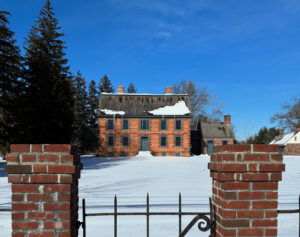
Dey Mansion Washington’s Headquarters. Photo courtesy of Darren Tobia.
In 1779, as General George Washington was traversing a wintery New Jersey during the Revolutionary War, he paid a visit to the home of Derrick Van Veghten. The Dutch family had not only built an estate along the Raritan River, but also the bridges that allowed Washington and his troops to cross the waterway.
“There was this bridge and the Queens Bridge in Bound Brook Brook and those were the only two places close to New Brunswick where he could cross,” said Frank McGonigle, president of the Somerset County Historical Society.
The Van Veghten House’s location near the river was crucial to its existence as goods back then were transported on waterways. But it has also made the historic structure prone to flooding. The Somerset County Historical Society, which is headquartered at the home, is tasked with building a floodwall that could cost more than $2 million.
Dutch Colonial homes are some of the United States oldest remaining historic buildings and preserving them is key to understanding how our nation and its early infrastructure came to be. Unfortunately, we continue to lose many of these homes. In the past few years, the Van Zile House and DeBaun House were both demolished, despite battles to save them.
These properties can also be sources of deeper understanding about the nation’s legacy of slavery as an archeological dig in 2017 unearthed at the Van Houten House. Despite its historical importance to Paterson, the Van Houten House is still roofless after a fire in 2019. This year, the City Council urged the county government in a resolution to take over the property as a means to save it.
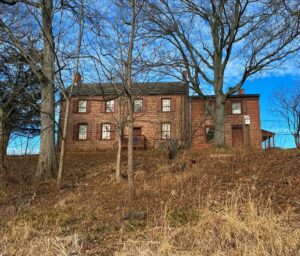
The Van Veghton House. Photo courtesy of Darren Tobia.
One of the reasons that some of the most important Dutch Colonial homes have survived in New Jersey is the Great Depression-era Works Progress Administration, which helped restore the Steuben House in River’s Edge in 1938 and Wayne’s Dey Mansion in 1934 — and again in 1937 to create an Olmsted-designed garden.
Today, the New Jersey Historic Trust is providing critical funds to important Dutch Colonial homes, including the Franklin Inn in Franklin Township and the Wortendyke House in Park Ridge. The nonprofit in charge of restoring Nutley’s Van Riper House said that their ongoing efforts to get it listed on the National Register was partly inspired by the 250th anniversary of the Revolutionary War.
“We’re hoping the nomination coincides with the 250th anniversary and all the activity around that,” said Dante Intindola, president of nonprofit Van Riper House, Inc. which has received $112,000 from the Historic Trust in the past three years for repairs. . “It’s on all our minds in the preservation community around Nutley.”
Many Dutch Colonial homes have a connection to the Revolutionary War because they were often located near bridges and served as billets. Dutch landowners were among the wealthiest residents in the colonies and could accommodate a war general’s extended stay. The Dey Mansion, home of Colonel Theunis Dey, is rare because George Washington stayed there twice. The second time was following the betrayal of Benedict Arnold, when Washington, more than ever, sought people he could trust.
The restoration and upkeep of these historic homes is only a part of their preservation. Their stewards also have to find a function for them that serves their communities.
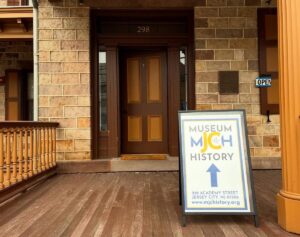
The Van Wagenen House. Photo courtesy of Darren Tobia.
The Dey Mansion, among the state’s most impressive house museums, hosts seminars and cultural events. The Van Veghton Home, in addition to being a museum, serves as an important library for genealogy. In a second-floor room are shelves of books with Dutch surnames on their spines, which visitors can use to trace back their roots.
“I’ve learned more American history by tracing my ancestry than I ever did in school,” McGonigle said.
Although the future of some Dutch Colonial homes remains uncertain, preservationists can look to Jersey City’s Van Wagenen House, which reopened in 2017, for hope. It stands as a testament that with enough public support, an 18th-century home can be saved, even in a neighborhood where skyscrapers now lurch over the yard where the family’s apple orchard once stood.
“The city rallied around it because everyone had a fondness for this house,” said Ken Hozin, a board member of the Museum of Jersey City History, which is planning a Revolutionary War-themed exhibit in May called Enduring Promise 2026.