
- March 28, 2026
- Paul Muir
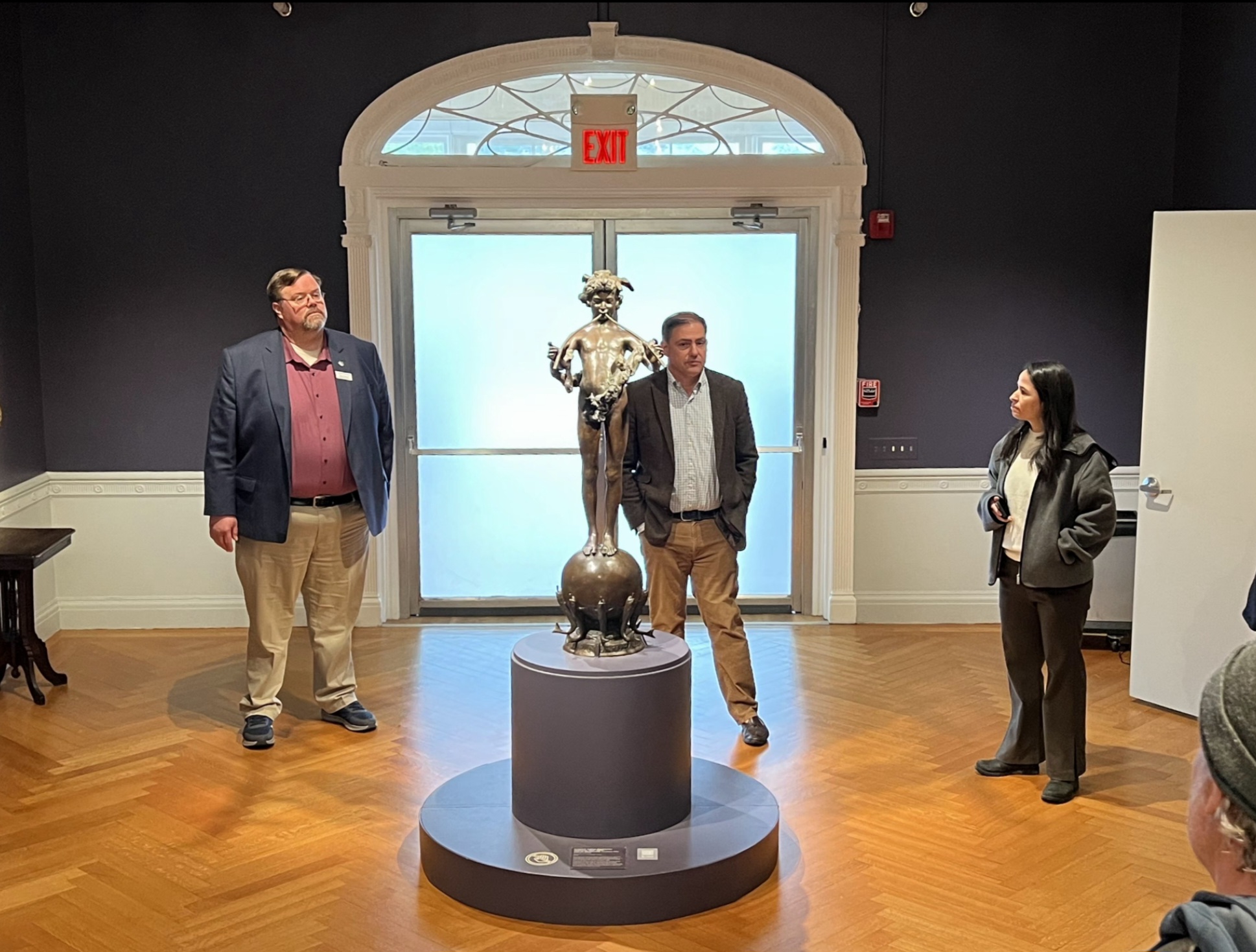
At the recent Association of Preservation Technology Northeast Conference in early March, Preservation New Jersey President Paul Muir and Director of External Affairs at the Morris Museum led a tour which guided exploration of the Morris Museum’s built evolution—from its origins as the McKim Mead and White designed 1913 Twin Oaks Mansion and former Frelinghuysen Family residence, to the layered sequence of additions completed in 1970, 1990, and 2007. Paul was joined by museum President and CEO Thomas Loughman and Structural Engineer Specialist Amarantha Quintana-Morales of Simpson Gumpertz & Heger. Together they traced more than a century of changing construction practices, materials, and architectural ambitions.
The presentation provided AIA and RCEP Continuing Education credits to construction professionals in attendance who examined how each era reflects the technologies and assumptions of its time: the robust mass-masonry construction of the original Mansion, the experimental veneer and early membrane systems of the 1970s, the more complex but still imperfect cavity wall and fenestration assemblies of the 1990s, and the contemporary, yet aging systems of the 2007 expansion.
 The presentation highlighted how these systems have weathered over time, where they fall short of modern museum performance expectations, and how transitions often reveal the most persistent vulnerabilities. Participants saw firsthand the impacts of moisture intrusion and evolving construction standards, as well as the museum’s plans to address these challenges.
The tour concluded with a look ahead at the museum’s proactive preservation and renovation vision. After a complete facilities assessment completed by SGH, the museum made plans for enhanced environmental control to protect its collections, a coordinated strategy supported by further investigation, enclosure upgrades, and a comprehensive feasibility study which will guide future interventions. This was an inside look at how a historic museum campus adapts its physical fabric to meet 21st‑century cultural, environmental, and preservation goals.
Along the way of this interactive presentation Muir, Loughman and Quintana-Morales identified how construction methods from the 1913 Mansion through the 2007 addition influence long‑term enclosure performance, including how masonry, veneer, cavity‑wall, stucco, and metal panel systems age and fail. How to recognize common building‑enclosure failure mechanisms across multiple construction eras such as moisture intrusion, inadequate flashing, failed fenestration assemblies, deteriorated roofing, and vulnerabilities at transitions between additions. Features often found through many historic sites as attempts are made at maintenance and preventing deterioration throughout years of disparate leadership, budgets and evolving knowledge.
Together they evaluated appropriate repair and replacement strategies for aging enclosure systems, and understanding when additional investigations (probes, water testing, or material assessment) are required to determine root causes and define a durable repair scope. Strategies used by the museum to adapt, repair, and manage enclosure issues while supporting evolving programming, collections, and visitor experience were discussed.
The presentation also addressed public welfare by demonstrating how inadequate thermal performance, failed air and moisture barriers, and poorly performing transitions between additions prevent the museum from achieving stable interior temperature and humidity. These conditions directly impact the health of both occupants and sensitive collections, and highlight the need for enclosure upgrades, proper waterproofing, and integration with future HVAC improvements to maintain safe indoor environments.
By reviewing real‑world examples of deferred maintenance, end‑of‑life systems, and construction‑era differences in enclosure design, the program reinforced the importance of proactive assessment, testing, and rehabilitation to prevent hazards such as mold growth, falling facade components, structural deterioration, and continued moisture damage. It also underscored the necessity of feasibility studies to guide responsible preservation interventions that meet contemporary performance standards while respecting historic significance.
Through this applied learning experience, participants gained knowledge essential to protecting the health, safety, and welfare of building occupants and the broader community, while ensuring the responsible stewardship of historic and cultural resources, skills which will be applied to projects those in attendance are currently working on as well as enhancing their ability to tackle future projects.