

- May 23, 2026
- Maria Boyes
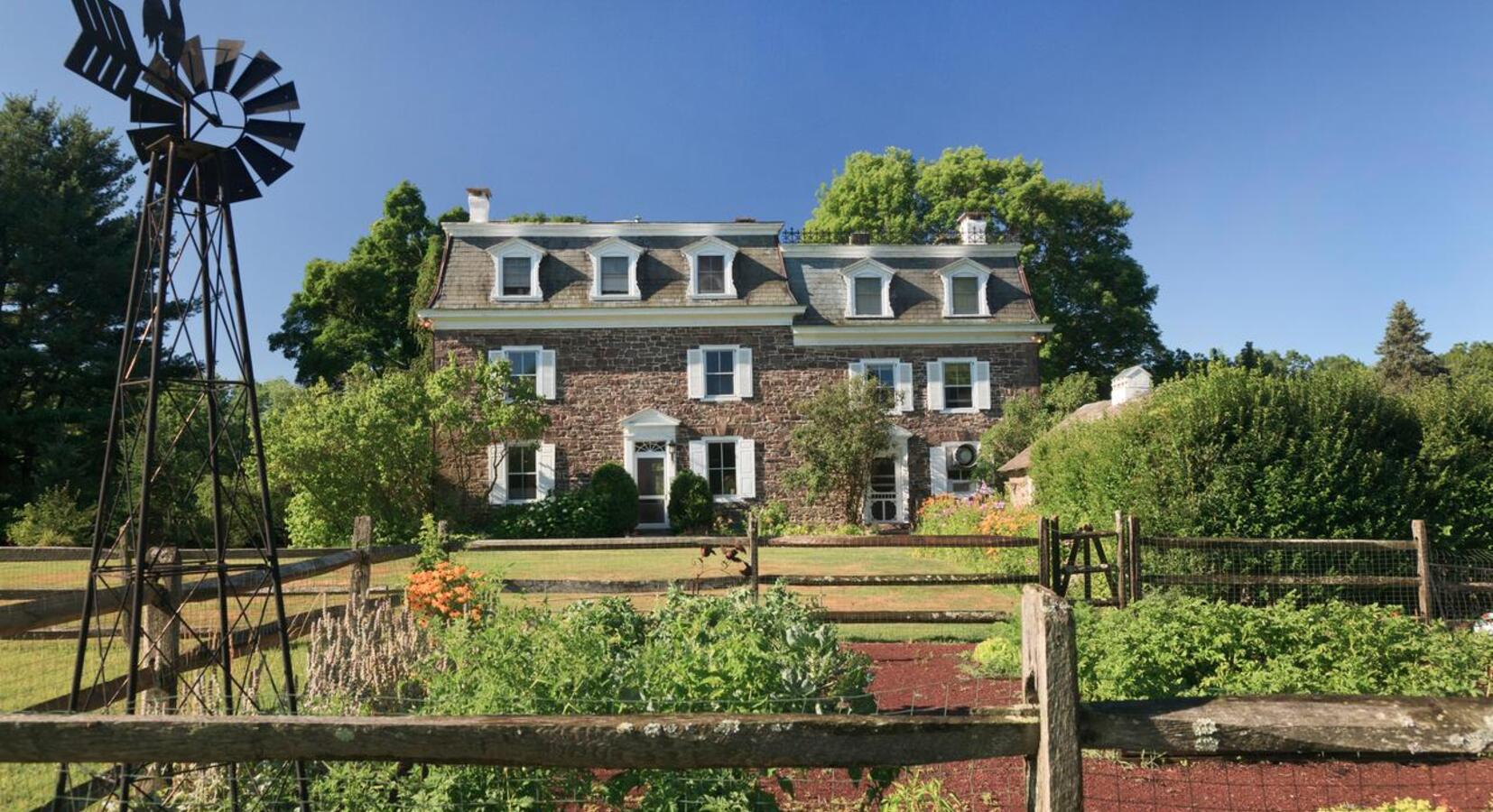
The Woolverton Inn, an excellent example of adaptive reuse, sits in a bucolic setting along the banks of the Delaware River. Both the inn and the surrounding area are steeped in history dating back to the Revolutionary War era and the early days of commerce in the region.
Built in 1792 by Lieutenant John Prall Jr., who served in the Revolutionary War, the inn was originally a 2-story farmhouse. By the mid-1800’s, Maurice and Asher Woolverton purchased the farmhouse and a portion of the land transforming it into today’s 3-story Federal-Style Manor house, an architectural style which was quite prevalent during that time period.
The property remained a private home and farm until the 1980s, when it was purchased and converted into a historical Bed and Breakfast by then owner, Anne Hackl. Today, after significant and sensitive renovations made by the current owners, Mary and Mario Passalacqua, the Woolverton Inn is an award-winning hotel and was recently recognized for Adaptive Reuse by the National Trust’s Historic Hotels of America.
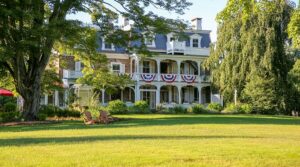 Current owner and general manager, Mary Passalacqua is honored by this recognition. “This association is made up of people who care about history and preservation,” she says. “It’s a natural fit!” The requirements of becoming a member of the Historic Hotels of America are quite high, according to Passalacqua and she proudly relays the importance of considering quality, performance, and standards to become a member.
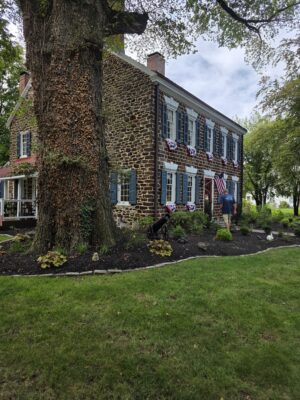
Another structure on the property that has been gaining a lot of attention is the recently renovated Northridge Restaurant. When the current owners first purchased the property, this 1830s stone barn was in severe disrepair. “There were sections of the barn that were collapsing,” remembers Mary Passalacqua, “but we knew it was salvageable.” And that’s exactly what they did. Today, four years later, this beautifully restored venue maintains the original structural elements, with rustic stone walls, and wooden beams while hosting diners year-round and up to 150 guests for private events.
By repurposing both historic buildings rather than constructing new ones, the Woolverton Inn strategically minimizes its environmental impact while maintaining its rich architectural heritage. Guests go there to unplug and immerse themselves in the ten acres of gardens and pastoral grounds surrounded by preserved farmland while many enjoy communing with the six friendly sheep on property—kept in honor of the inn’s roots in farming.


Ken Roginski
| 24 May 2026Hi – just wanted to let you know that I enjoy and appreciate these well-written articles. I get many articles sent to me, but these informative articles from PNJ are read word for word.
Kelly C. Ruffel
| 25 May 2026Thank you Ken!!!
Stephen Schwartz
| 25 May 2026I totally agree with Ken. Always great articles, well written, and I can’t wait to visit this one,
both to stay and to dine.