
- July 10, 2026
- James Giresi
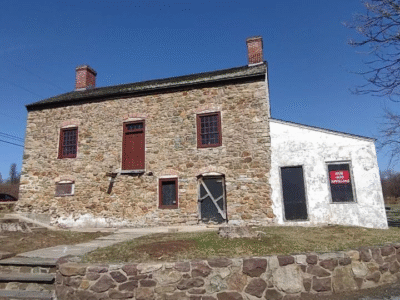
Built by Benjamin Cooper in 1734, the Benjamin Cooper House & Tavern is not only one of the earliest surviving buildings in Camden, but also one of the city’s most significant extant ferry-related properties. Benjamin Cooper was the grandson of William Cooper, one of the earliest English settlers in Camden during the late seventeenth century. Upon Benjamin Cooper’s death in 1772, ownership of the house passed to his eldest son, Joseph. During the British occupation of Philadelphia in the Revolutionary War, the property, still owned by the Cooper family, was commandeered as the headquarters of British Lieutenant Colonel Abercrombie. In the decades that followed, the building served a variety of purposes. It operated as a saloon known as The Old Stone Jug and later as a “pleasure garden,” a popular recreational destination for residents of the surrounding villages that would eventually consolidate into the City of Camden. Beginning in the early twentieth century, the property was occupied by the John H. Mathis & Company Shipyard, and later Camden Ship Repair, as office space. More recently, the building sat vacant and became the target of vandalism and arson.
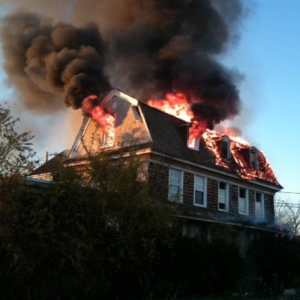
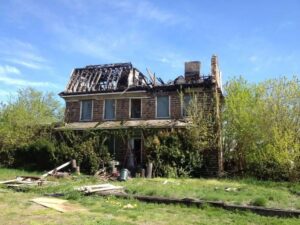
Its full Dutch Colonial form, including its massive gambrel roof, remained intact until a devastating fire in 2012 destroyed the roof and dramatically accelerated the building’s deterioration. The west gable retains its original keystone inscribed “B.+H.C. 1734,” commemorating the builders, Benjamin and Hannah Cooper, and the year of construction. Although the fire caused extensive structural damage and significant loss of plaster, much of the first floor survived, including substantial portions of the historic woodwork. Following the catastrophic fire, Preservation New Jersey placed the Benjamin Cooper House & Tavern on its 10 Most Endangered Historic Places list in 2013.
The fire ultimately became the catalyst for preservation. The Camden County Historical Society, together with local advocates and community partners, launched a campaign to save and restore the property. A Preservation Plan, partially funded by the New Jersey Historic Trust, was completed in October 2021. With support from state, federal, county, and local funding partners, the Benjamin Cooper House & Tavern has since been transformed into the American Revolution Museum of Southern New Jersey showcasing the overlooked role of South Jersey in the revolution. The exhibits examine the promise of the Declaration of Independence’s statement that “all men are created equal,” and the struggle for equality to the present day.
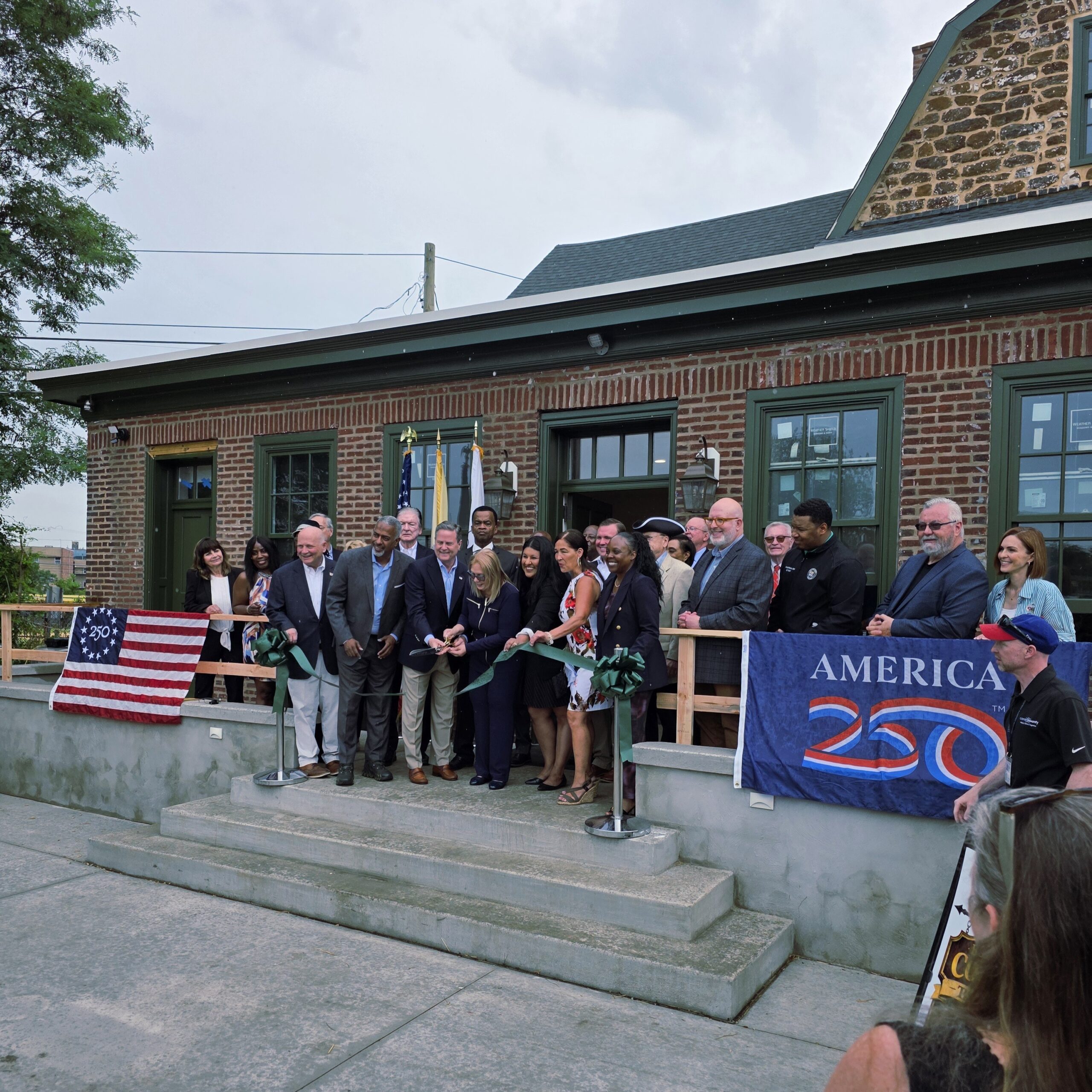
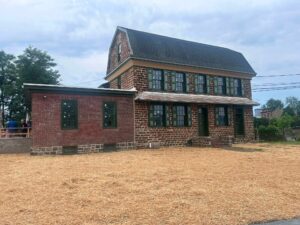 On Saturday, June 27, 2026, the ribbon was cut, officially opening the museum’s first-floor galleries in time for America’s 250th anniversary. This remarkable transformation not only preserves Camden’s oldest surviving building but also establishes a vibrant and inclusive destination for education, community engagement, and heritage tourism. Future phases of the project will include restoration of the second floor, replacement of the historic gambrel roof, and reconstruction of its dormers, completing the restoration of the building’s iconic silhouette.
The restoration of the Benjamin Cooper House & Tavern is also significant because it will serve as the trailhead for the North Camden and Cramer Hill Waterfront Trails Project, part of the 33-mile Camden County LINK Trail extending toward Atlantic County. This initiative envisions a network of bicycle and pedestrian trails connecting North Camden and Cramer Hill to the larger region. As the trailhead, the Benjamin Cooper House will function as a welcoming gateway, complementing its role as a museum, visitor center, and community gathering place.
Preservation New Jersey applauds the Camden County Historical Society and the many public and private partners whose commitment ensured the future of this extraordinary landmark. By preserving and interpreting this State Register-listed resource, these organizations have helped write a new chapter in Camden’s history—one that demonstrates how historic preservation can serve as a powerful catalyst for community revitalization and inspire future preservation success stories throughout the city.