
County: Essex
Location: Newark
Year Listed: 2026
Status: Endangered
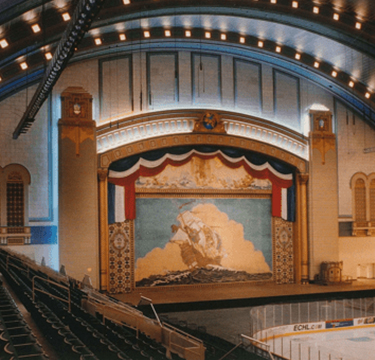
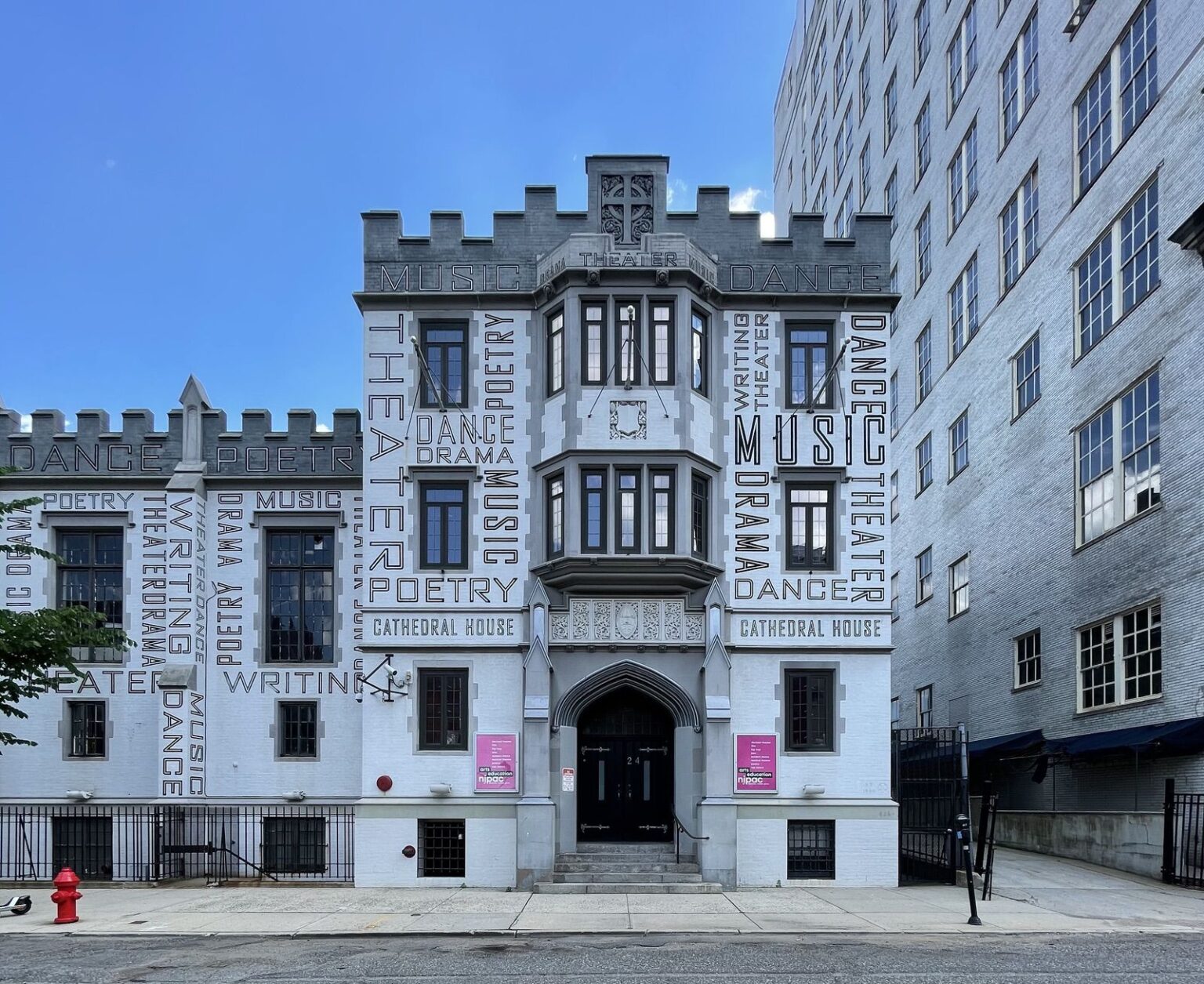
The City of Newark’s history is written in its buildings, from Puritan settlement to industrial powerhouse to socioeconomic upheaval to hopeful revitalization. Among its many gems is Cathedral House, at 24 Rector Street, a rare and irreplaceable landmark whose architectural, cultural, and social significance spans nearly a century of Newark history. Constructed in 1941 as the rectory for the adjacent Trinity & St. Philip’s Cathedral and designed in the Collegiate Gothic style by renowned Newark architects John and Wilson Ely, the building is a contributing resource within the Military Park Commons Historic District. Distinguished by its crenellated parapets, pointed arch entry, cathedral windows, brick buttresses, and central tower crowned by a dramatic two-story oriel window, Cathedral House stands as the Ely firm’s only known gothicizing work. Beyond its architectural importance, the building embodies multiple layers of Newark’s civic and cultural history. Originally developed for the Episcopal Diocese of Newark, it housed chapels, meeting halls, classrooms, a gymnasium, and a 600-seat auditorium that served generations of church, educational, and community activities. In 1967, the building hosted the landmark National Black Power Conference just weeks after the Newark Rebellion, bringing together more than 1,000 activists and positioning Cathedral House as a nationally significant site in the history of Black political organizing and civil rights activism. Since the late 1990s, the structure has also served thousands of Newark youth through NJPAC arts education programs and became internationally recognized for Paula Scher’s celebrated “supergraphics” mural installation, now documented in museums and design publications including the Smithsonian’s Cooper Hewitt Design Museum.
Despite its remarkable historic integrity and continued usability, Cathedral House now faces imminent demolition following repeated efforts by NJPAC over the past three decades to remove the building. Preservation advocates argue that NJPAC has repeatedly shifted its justification for demolition from earlier claims tied to redevelopment needs and parking demands to more recent arguments of financial hardship. Further, they have failed to honor preservation commitments established through a legally binding 1993 Section 106 agreement requiring adaptive reuse and long-term protection of the structure. In 2026, the Newark Landmarks & Historic Preservation Commission approved demolition despite widespread community opposition, unresolved legal and ethical concerns, and the building’s recognized historic significance. Advocacy groups including Newark Landmarks, neighborhood associations, preservationists, architects, historians, and local residents contend that demolishing a structurally sound and fully occupiable landmark for a temporary pocket park and surface parking lot would establish a dangerous precedent for Newark and historic preservation statewide. We are calling on NJPAC and city officials to pursue adaptive reuse solutions that preserve the building’s layered history and ensure that this important landmark continues to tell the stories of Newark’s architecture, civil rights activism, arts education, and community identity for future generations.