
County: Warren
Location: Knowlton Township
Year Listed: 2026
Status: Endangered
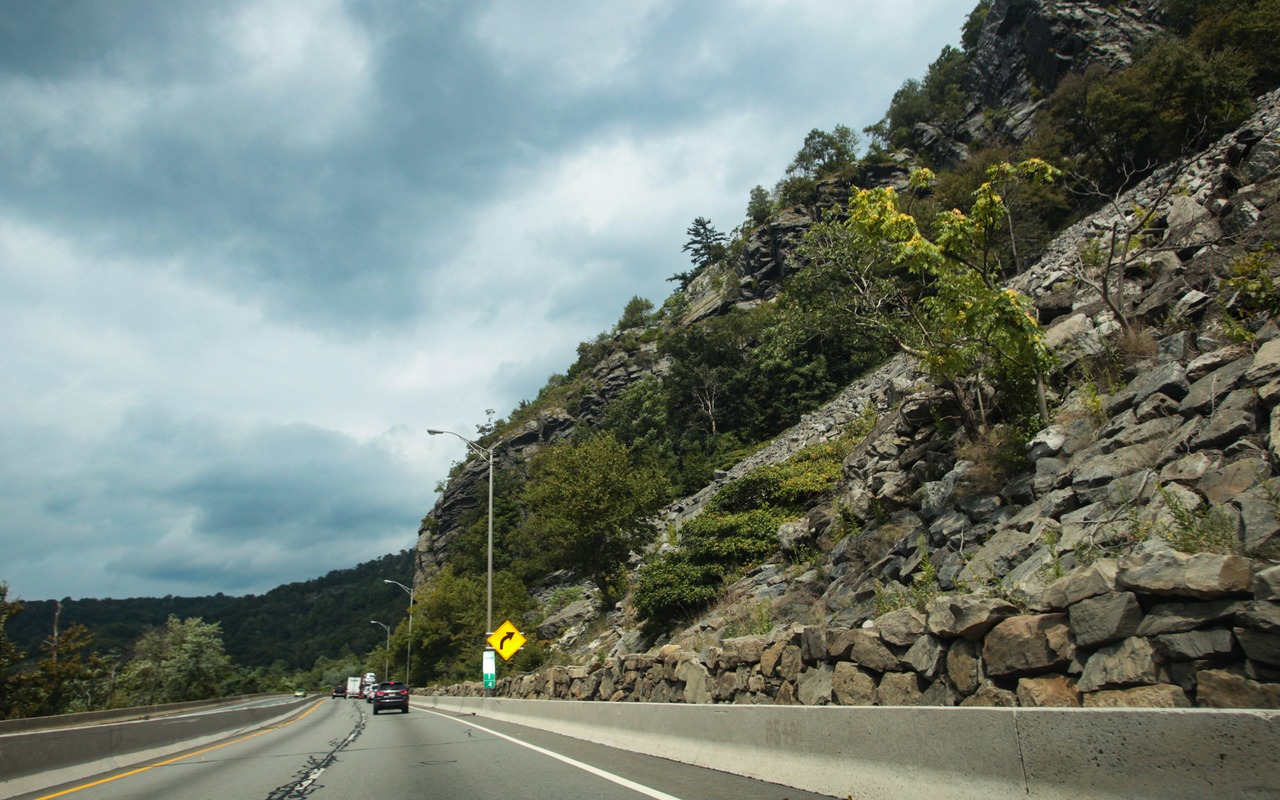
New Jersey’s transportation history includes several railroads established to serve industries and connect communities before automobile ownership became common. The imprints of their now-defunct rights-of-way still shape the modern landscape, but examples of railroad infrastructure can be rare. The Stacked Stone Rock Slide Barrier is an especially rare surviving example of historic transportation engineering located along the Interstate 80 westbound “S-Curves” at the base of Mount Tammany within the Delaware Water Gap National Recreation Area.
Constructed prior to the Interstate era, it is believed to be a relic of the New York, Susquehanna & Western Railroad corridor near Dunfield Creek Station, where rocks falling from the steep Delaware Water Gap threatened tracks and trains. The hand-laid masonry wall reflects late 19th- to early 20th-century engineering practices designed to mitigate such dangerous rockfall conditions. Built as a gravity retaining wall with a battered profile, the structure measures up to 10 feet high and 10 feet wide in some sections and remains largely intact and functional today. NJDOT records from the 1950s confirm the wall predates Interstate 80 and was incorporated into earlier scenic highway infrastructure. Its rough-cut stone construction, integrated into the natural landscape of the Kittatinny Ridge, represents an earlier transportation design philosophy that balanced safety with visual harmony within the landscape. The barrier contributes to the historic character and continuity of the Delaware Water Gap corridor, which encompasses layers of transportation history from Indigenous travel routes and railroad development to scenic highways and the Interstate system. Visible from roadways, trails, the Delaware River, and the Appalachian Trail, the structure remains an important character-defining feature of one of the Northeast’s most iconic transportation landscapes.
The barrier now faces imminent destruction as part of a major NJDOT rockfall mitigation project that proposes blasting the mountainside and replacing the historic masonry structure with modern rockfall fencing and catchment systems. Preservation advocates and regional stakeholders argue that NJDOT has failed to fully evaluate the barrier’s historic significance or its likely railroad-era origins before advancing demolition plans under a federal Interstate exemption intended for later highway infrastructure. Over the past decade, local officials, preservationists, environmental organizations, tribal representatives, and regional advocacy groups have repeatedly called for greater transparency, a full Environmental Impact Statement, and comprehensive historic evaluation of both the barrier and the broader Delaware Water Gap transportation corridor.
Preservation New Jersey is listing the Stacked Stone Rock Slide Barrier on its “10 Most Endangered Historic Places” list because it represents one of the few remaining historic engineered stone infrastructure features within the Delaware Water Gap corridor and because irreversible destruction could occur before its historic significance is fully evaluated. The listing recognizes not only the structure’s engineering and transportation history importance, but also the urgent need for transparent review, consideration of alternatives, and preservation-sensitive solutions that protect both public safety and the historic integrity of this nationally significant landscape.