
County: Warren
Location: Hardwick Township
Year Listed: 2026
Status: Endangered
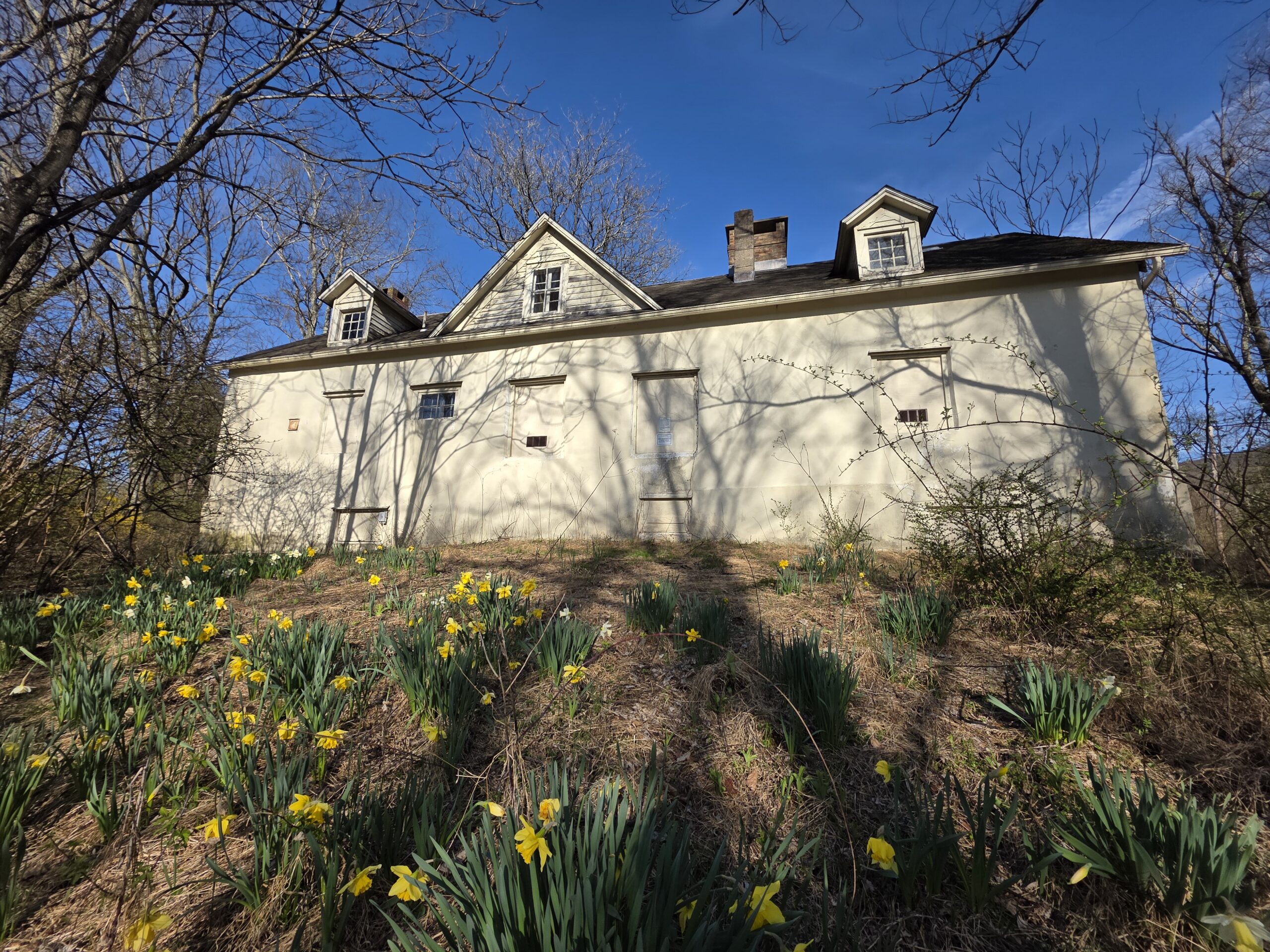
Few sites encompass as many aspects of early colonial life in New Jersey as The Van Campen Homestead along Old Mine Road in the Delaware Water Gap National Recreation Area. Centered around the Abraham Van Campen House, constructed circa 1725–1735, the property reflects the earliest European settlement of the lower Minisink Valley and retains remarkable architectural integrity. The property features such diverse structures as homes, a barn, family cemeteries, and even a fort. Homes include the Abraham Van Campen House and the Benjamin Van Campen House, with associated barns dating to 1840. Members of the Calno and Depue families are interred on the property. The foundation of the original Abraham Van Campen fort is also present as a rare example of fortifications established during the French and Indian War period.
The Abraham Van Campen House, listed within the Old Mine Road Historic District on the National Register of Historic Places and documented through the Historic American Buildings Survey, preserves important colonial features including massive arched fireplaces, exposed beaded ceiling joists, early hinge hardware, and a basement area believed to have housed enslaved individuals. Abraham Van Campen himself was a pivotal figure in early New Jersey history, serving as settler, judge, Justice of the Peace, militia colonel, and commander of one of the Delaware River frontier forts established in 1756. The homestead is also deeply connected to Revolutionary War history through descendants and relatives including Isaac Van Campen of the Van Campen Inn, Revolutionary War soldier Moses Van Campen, and Henry Shoemaker of the Copper Mine Inn. Set within an idyllic rural landscape along Old Mine Road, the homestead today remains a hidden gem that continues to attract hikers, artists, photographers, and historians seeking a tangible connection to New Jersey’s colonial and frontier past.
Despite its exceptional historic importance and generally intact condition, the Van Campen Homestead is increasingly threatened by deterioration, moisture damage, insect infestation, and long-term lack of funding and maintenance. Although both primary houses were rated in good general condition within the National Park Service’s 2024 Cultural Landscape Report, urgent repairs are needed to stabilize the structures and prevent accelerated decline. The Abraham Van Campen House requires a new roof, restored electrical service to maintain the HVAC system and dry basement conditions, replacement doors, and mitigation of extensive cave cricket infestation. The Benjamin Van Campen House faces more serious structural concerns, including powder post beetle damage to basement beams, significant rot at the northeast corner, failing drainage systems, water intrusion, and deterioration of the rear porch structure. The National Park Service, burdened by decades of underfunding and staffing shortages throughout the Delaware Water Gap National Recreation Area, has struggled to adequately maintain many historic properties within the park system, leaving important sites vulnerable to neglect and vandalism. In response, descendants of Abraham Van Campen and local preservation advocates have formed a grassroots preservation partnership with Friends of DEWANPS to coordinate fundraising, public outreach, and restoration efforts.