
County: Mercer
Location: Hopewell
Year Listed: 2026
Status: Endangered
Hopewell Township was once a prime example of why New Jersey is known as “the garden state.” While still rural, few examples remain of the buildings associated with its agricultural past. The Burroughs/Van Wagoner House in Pennington is one of the last properties to capture the importance of the area to the state’s farming legacy.
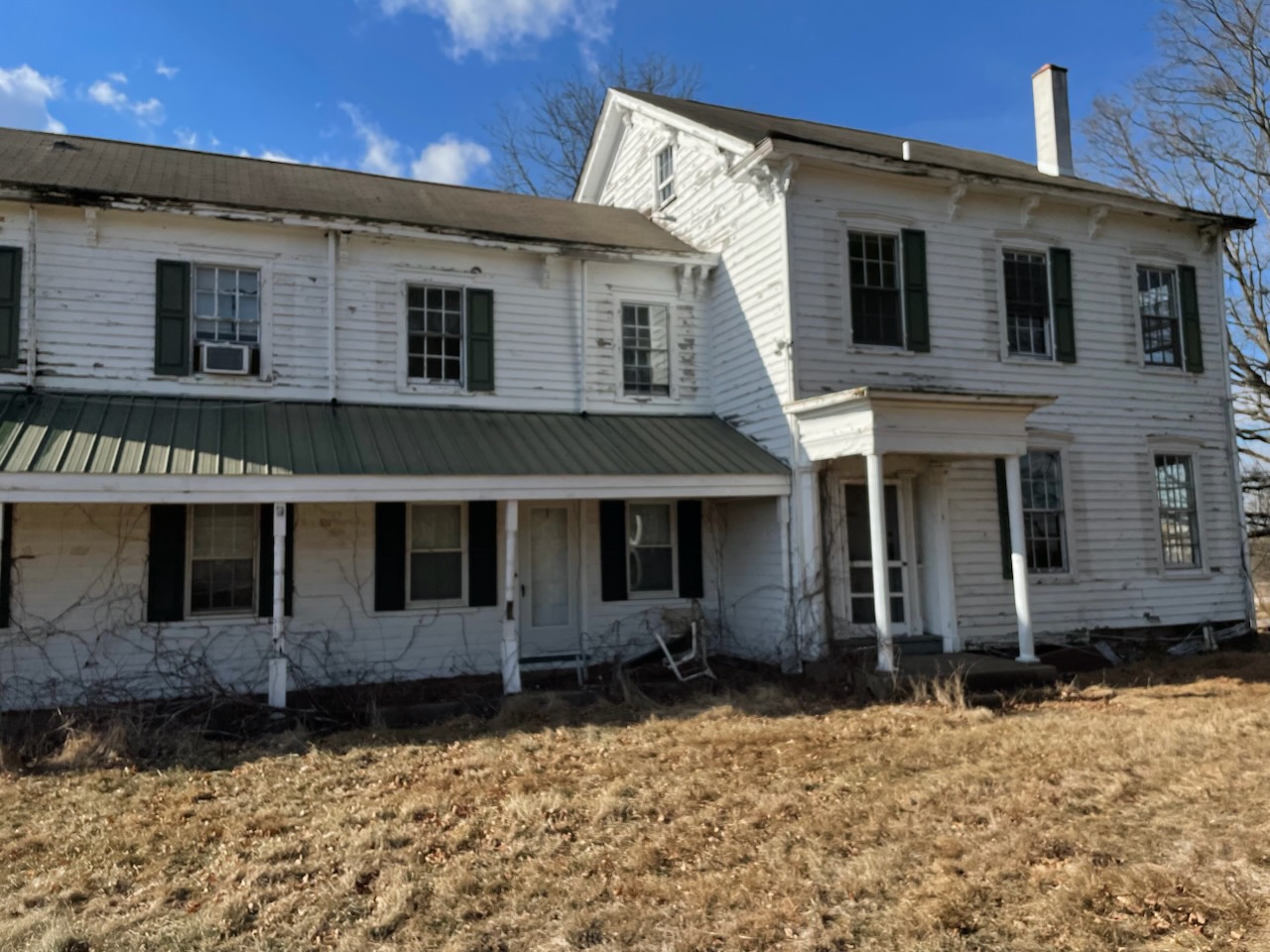
At the heart of the property stands a two-story frame dwelling with clapboard siding, stone foundations, and refined Greek Revival detailing, including a grand staircase, marble mantels, and distinctive Egyptoid window and door casings. The house is believed to date between 1800 and 1830. In addition to the house, the accompanying double corn crib barn, documented in the 1985 Hopewell Cultural Resource Survey, was likely constructed between 1860 and 1880. Positioned prominently along the roadway, the property has long been recognized as a local landmark and one of the last remaining visual connections to the historic rural character of this section of Hopewell Township. Historian David Blackwell described it as “the sole evidence of the past and portrayer of Hopewell Township’s rural character in this district,” emphasizing its importance as an enduring symbol of Hopewell’s identity and landscape.
Despite its historic and architectural significance, the Burroughs/Van Wagoner House is now facing severe deterioration due to years of neglect and exposure. Following the property’s purchase by CF Hopewell LLC and the removal of the last tenant in 2013, the building has been left unsecured and vulnerable to vandalism, weather damage, and structural decay. Broken windows and open doors have left the interior vulnerable to the elements, where vines now grow. Vandalism has resulted in the copper piping and portions of the porch roof being stripped away, and historic features such as a marble mantel have been torn from their original locations. Structural concerns include collapsing porch supports, rotting soffits, corbels, and fascia boards throughout the house.
As surrounding affordable housing developments grow, there is increasing concern that the property may ultimately be demolished. For decades, the Hopewell Township Historic Preservation Commission and the Hopewell Valley Historical Society have advocated for the preservation and adaptive reuse of the site, citing its importance to the Township’s Master Plan and its potential to continue serving the community as a visible and meaningful link to Hopewell’s historic past