
- December 5, 2025
- Maria Boyes
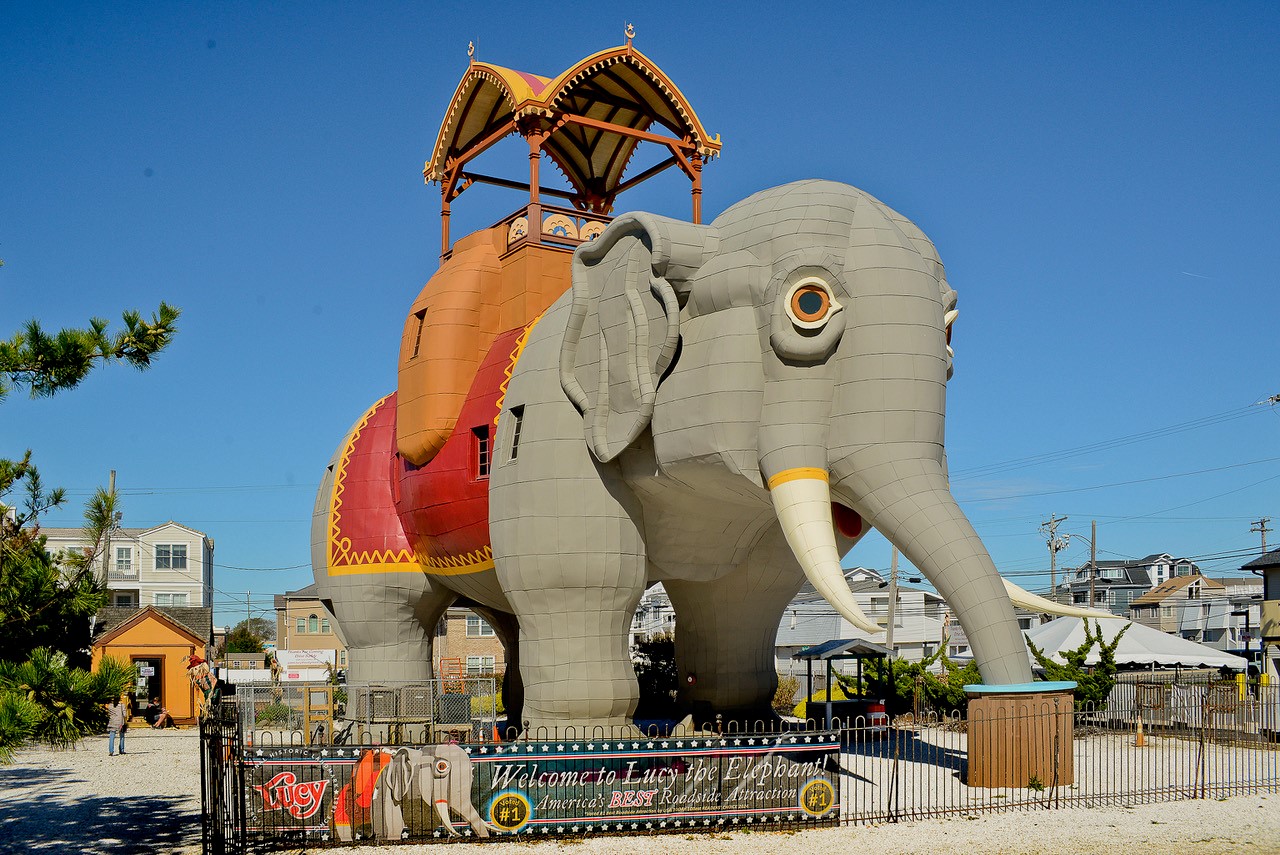
 How does one define an architectural folly? Generally, these structures are considered fanciful, sometimes extravagant, built for pleasure rather than for practical purposes, and typically found on private landscapes. The trend, which began in 18th century England, allowed wealthy landowners to add interest to their formal gardens. Most common examples include make-shift temples, castle-like structures, and free-standing towers. In New Jersey however, the most famous folly comes in the form of a 6-story elephant—named Lucy.
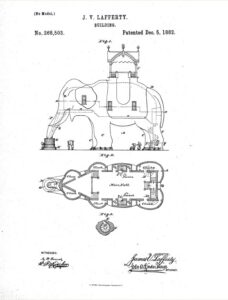 Born as a marketing idea in 1881 by land developer James V. Lafferty, Lucy was built to attract potential home buyers to the city of Margate, a short distance from Atlantic City. Once visitors would come to marvel at the elephant’s sheer scale, they were invited to take a tour of the interior and then up to the observation deck, or “howdah” (named for the canopied structure tethered to the torso of elephants used to transport royalty in India) and enjoy the panoramic ocean views, as well as available lots for sale.
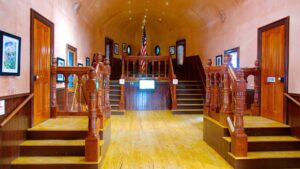
Lafferty knew that his elephant was so unique that he applied for and received a patent, not only for his elephant building, but also giving him the exclusive right to make, use or sell any “animal-shaped building” for seventeen years. Lucy’s skeleton is a large frame box of 12×12 inch wood timber surrounded by “ribs” while her skin is composed of steel-coated cladding and glass windows. Two spiral staircases, one in each rear leg, provides access to the interior which is designed in the Gothic Revival style.
Today, almost a century and a half after her original construction, Lucy stands proudly as a significant member of the Margate community. Although built as a marketing tool, and eventually used as a tavern and even part-time summer residence, the structure began to suffer from neglect and was slated for demolition during the 1960s. That’s when the Save Lucy Committee (SLC), a non-profit organization formed by local residents, raised money to save her from the wrecking ball and moved her a few blocks down the street to public land.
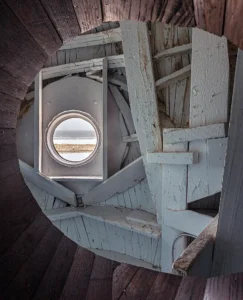 Historic Architect Margaret Westfield was brought on to aid with the restoration of Lucy in the early 1990s. Initially, her firm needed to restore and reconstruct a faulty air-conditioning system that was holding in the moisture and creating condensation beneath the “skin.” “It was an environmental nightmare,” remembers Westfield. “We needed to ventilate the outer surface so the wood could breathe.” They then restored the elegant interior taking their cue from the patent drawings.
“Lucy is the ultimate architectural folly and very significant to her surroundings,” says Westfield. “Her presence encourages people to learn about the history of the area and what brought people here.”
Richard Helfant is the Executive Director of Lucy the Elephant and lifetime Margate resident. Not only has he worked for the SLC since 2000, he remembers visiting the elephant with his mother when he was five years old and selling candy in middle school to help raise money to save her.
“Lucy is a testament to man’s ingenuity and imagination. Her role in history is significant not only for local residents but as part of the growth of the Jersey Shore,” says Helfant. In addition to being the nation’s oldest roadside attraction, Lucy was recently voted and officially named America’s #1 Best Roadside Attraction by USA Today.
Each year, approximately 40,000 visitors come to see Lucy and although exterior restoration was completed a few years ago, the interior still needs help. In 2024, the SLC applied for and received a grant from the National Park Service that was earmarked to restore the interior however plans were halted earlier this year when the Department of Government Efficiency (DOGE) rescinded those funds. Helfant however is undeterred and plans to reapply next year.
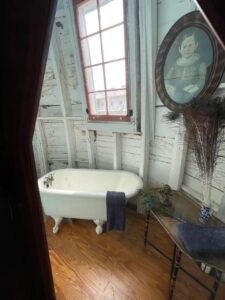 General funds to keep Lucy going comes from ticket and gift shop sales, as well as private donations. Helfant is excited that future plans include a new Welcome Center that will be ADA compliant and hopes to break ground in 2026. “This is the final step to make the park around her equal to her” says Helfant. “She is on the world stage and the grounds around her should reflect that.” To visit or donate to Lucy, visit https://lucytheelephant.org.