
- September 5, 2026
- Kelly C. Ruffel
A historic Plainfield residence with more than a century of architectural and community history is facing an uncertain future following the City Council’s decision to designate the property as an Area in Need of Redevelopment.
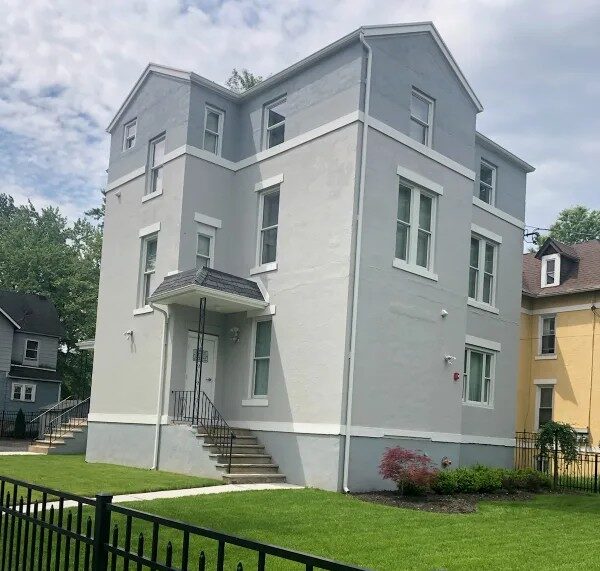
Dudley House, located at 930 Putnam Avenue, is a contributing resource within Plainfield’s Putnam-Watchung Historic District. Constructed in the late nineteenth century, the three-story Italianate-style house reflects the residential development that transformed Plainfield into a prominent suburban community during the Victorian era. Historic documentation identifies characteristic features including its low-pitched roof, tall narrow windows, and decorative porch elements.
The significance of Dudley House, however, extends beyond its architecture. For decades, the building has demonstrated how an older property can be successfully adapted to meet changing community needs.
Beginning in the 1970s, the former residence became a center for substance-abuse rehabilitation and transitional housing. Named for former Plainfield Welfare Director Ruth Dudley, the property was associated with Project Alert and later with Muhlenberg Hospital and The Gateway Family YMCA.
The building underwent significant rehabilitation over the years, including work in 1985 and again in 2018. The latter project included restoration of exterior features, replacement windows, accessibility improvements, and other work reviewed through Plainfield’s historic preservation process. Documentation prepared by Save the Queen City maintains that these improvements preserved much of the building’s architectural integrity.
Most recently, Dudley House operated as a 19-bed transitional housing program for veterans. That program closed in February 2026 following the withdrawal of operating funding, leaving the municipally owned building vacant.
A Debate Over Preservation and Redevelopment
The building’s vacancy has now prompted a larger discussion about what comes next.
On July 13, 2026, the Plainfield City Council approved Resolution 274-26 by a narrow 4-3 vote, designating the Dudley House property as an Area in Need of Redevelopment. The designation does not approve a particular development proposal, but it allows the City to move toward preparation of a redevelopment plan establishing future uses, density, scale, and other development standards for the property.
During the Council discussion, City officials indicated that additional housing is being considered. While no final plan has been developed, Economic Development Director Zenobia Fields estimated that a future project could involve approximately 15 units and acknowledged that development would most likely extend beyond the footprint of the existing building.
Preservation advocates, including Save the Queen City, have challenged the need for the redevelopment designation. They argue that Dudley House is not a deteriorated or obsolete structure requiring redevelopment, but rather a recently rehabilitated historic building whose vacancy resulted from the loss of funding for its previous program. The organization’s position is that the City should first pursue preservation-compatible alternatives, including new nonprofit or social-service operators, grant funding, rehabilitation incentives, and public-private partnerships.
The debate also raises concerns about the protections that may apply to Dudley House as the redevelopment process moves forward. Save the Queen City has argued that the designation could allow future decisions about the property to proceed without the historic preservation review that would ordinarily apply to a contributing resource within the historic district.
An Opportunity for Continued Use
Dudley House has already experienced numerous chapters: private residence, rehabilitation center, transitional housing facility, and veterans’ home. Its history demonstrates that preservation and adaptation do not have to be competing goals.
The building remains part of the historic streetscape of the Putnam-Watchung Historic District and has benefited from substantial public and private investment. Its most recent vacancy is measured in months rather than decades. As preservation advocates have emphasized, temporary vacancy does not necessarily mean that a historic property has reached the end of its useful life.
With a redevelopment designation now approved, attention will turn to the next phase of the City’s planning process. Questions about the number and scale of new housing units, the treatment of the existing structure, flood-hazard requirements, and historic preservation remain unresolved.
For New Jersey’s preservation community, Dudley House presents a familiar but important challenge: how can communities accommodate new needs while recognizing the value already embodied in their historic places?
The future of 930 Putnam Avenue has not yet been determined. That provides an opportunity for continued public engagement—and for a solution that recognizes Dudley House not simply as a redevelopment site, but as a historic resource capable of beginning yet another chapter of community service.


Jacques Kevin Croll
| 7 September 2026Plainfield Is the town that I was born in. In fact the old hospital was my birth place! Both of these building need to be saved, they are our history that can not be remade once they are gone!!! JC FROM Maine
Jacques Kevin Croll
| 7 September 2026Plainfield is were I was born, the old hospital, in fact. Both of these buildings need to be saved. You can’t rebuild history!! From Maine