
- August 8, 2026
- Darren Tobia
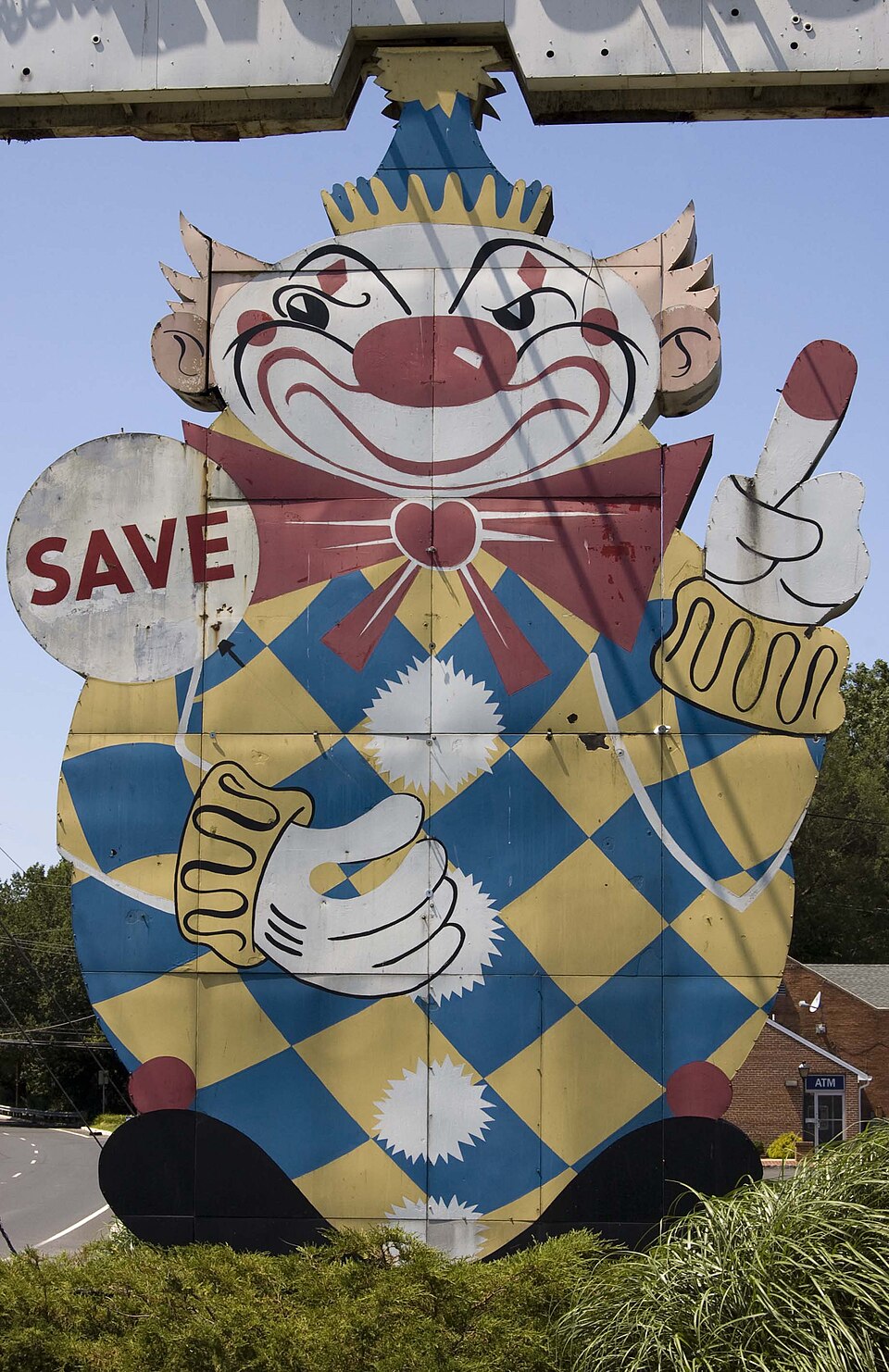
Calico the clown, Middletown’s famous roadside advertisement along Route 35, has certainly earned his infamous grin. In the last decade, the 1956 Food Circus store sign has been embroiled in a preservation battle that might be the cause of his grimace of late. Now, the town government finds itself in the throes of a builder’s remedy lawsuit with a developer that could finally decide the clown’s fate.
The developer, AAMHMT Property, is the contract purchaser for the 52-acre property in question. However, the Township Committee recently designated a different developer, Duva Development, for the Circus Liquor Redevelopment Plan, and the lawsuit seeks to prevent an official agreement from moving forward.
The story behind the Calico and the fight to save him can be a little confusing because it spans different developers and attempts to redevelop the liquor store and the sprawling property beside it that dates back to the 1990s.
However, a decade ago, the town government began working on a redevelopment plan that finally passed in 2018, allowing the liquor store and the surrounding properties to be redeveloped into a shopping center and townhomes. That is when Margie Rafferty, Middletown resident, sprung into action.
Rafferty said that the Calico sign is Middletown’s version of New Jersey’s quirky roadside attractions, similar to the role Lucy the Elephant is to Margate.
“Calico is ours,” she said. “He holds a place in everybody’s heart, affectionate or not.”
There has been a concerted effort to save New Jersey’s pop culture landmarks, from Wildwood’s Doo Wop motels to Asbury Park’s Tillie sign. Calico shares a common link with Tillie, which is entangled in its own preservation battle. The same artist — the late Leslie Worth Thomas, an artist for Neptune’s Road Ad Sign Company — created both of the signs. Thomas died in 2003.
Bob Crane, who founded the Save Tillie Foundation, said both signs are “ingrained in the fabric” of the local culture and “encapsulates history in a single visual.”
“There is an instant sense of shared identity and belonging,” Crane said. “Each of these icons deserve the respect of their communities.”
Rafferty tried to get the Calico sign listed on the State and National Register of Historic Places — and in 2015 it was deemed eligible for that distinction — but without the consent of the sign’s owner, the Azzolino family, the landmark designation cannot be made official.
Nevertheless, Rafferty’s believes the certificate of eligibility from the State Historic Preservation raised the profile of the preservation battle.
“The preservation paperwork brings enough attention to it — that was the most I could do without the blessing of the Azzolina family,” Rafferty said.
Joseph Azzolina, executive Vice President Food Circus Super Markets, told Preservation New Jersey he’s open to exploring ways to preserve the sign.
“We’re going to do what we can to save it, we’ll explore all avenues,” he said.
Anthony Mercantante, township administrator, believes it is unlikely the sign will remain in place if the redevelopment plans move forward.
“I find it hard to believe that they would build a residential development and leave the clown sitting out in front of it,” he said “There had been some talk that it would be moved to a different site but no decisions were ever made.”